How to Sell a Home in Venice: What Sellers Need to Know in 2026
Venice is one of the most coveted and most complicated neighborhoods to sell in all of Los Angeles. The same qualities that make it magnetic to buyers (the canals, the walkability, the creative energy, the ocean proximity) also layer on a set of regulatory, pricing, and presentation challenges that are uniquely Venetian. If you're thinking about listing in 2026, here's what you need to know before you put the sign in the yard.
Pricing Strategy: Getting It Right in a Nuanced Market
Venice doesn't have a single "price per square foot." It has micro-markets within micro-markets, and in 2026, the gap between a well-priced home and an overpriced one is punishing.
Know your sub-neighborhood. A bungalow on the Venice Canals commands a fundamentally different premium than a similar-sized home two blocks east of Lincoln. Silver Triangle, Milwood, Oakwood, and the walk streets each have their own comp pools. Blending them produces a price that fits nowhere.
Price to the buyer, not the neighbor. Venice buyers are sophisticated. Many have done tours across Santa Monica, Mar Vista, and Culver City before landing here. They know value. Sellers who anchor to what a neighbor sold for in 2022, before the rate environment shifted, routinely sit on the market and end up reducing anyway. A clean, honest opening price generates competition; a wishful one generates silence.
Factor in the coastal premium and its limits. Proximity to the beach and canal frontage absolutely justify premiums, but those premiums are not infinite. The luxury ceiling in Venice is real and well-defined. Pricing even 5–8% above that ceiling can add 60–90 days to your timeline.
Account for buyer carry costs. With rates still in the mid-6s to low-7s range, buyers are acutely sensitive to monthly payment math. Sellers who price with that arithmetic in mind, and who can offer rate buydown concessions, strategically tend to move faster and net more.
Staging: Selling the Venice Lifestyle, Not Just the Square Footage
Generic staging doesn't work in Venice. Buyers here aren't just buying a home, they're buying a way of life. Your staging should tell that story.
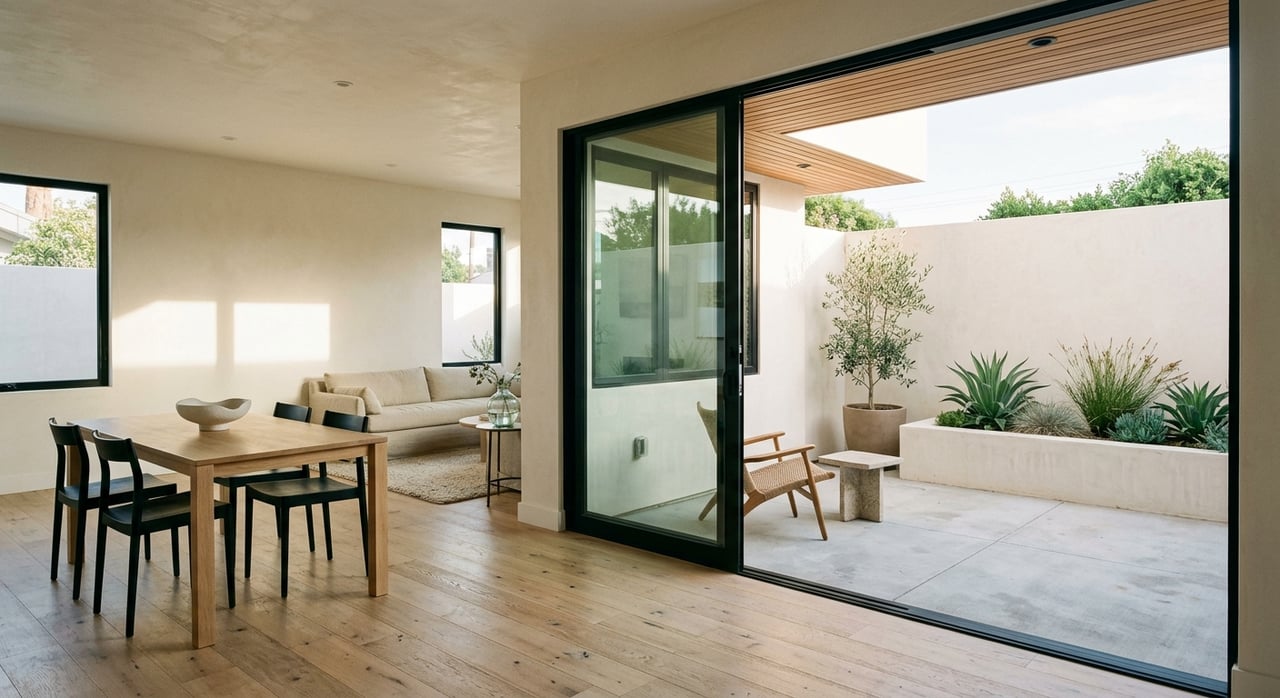
Lead with outdoor living. Venice's greatest asset is the ability to live outside. Patios, rooftop decks, courtyard spaces, and bike-accessible garages should be styled as primary living areas, not afterthoughts. Invest in outdoor furniture, ambient lighting, and potted landscaping. If your home has a roof deck, stage it fully. It often photographs as dramatically as any interior space.
Lean into the texture of the neighborhood. Overly corporate, hotel-style staging reads as out of place in Venice. Buyers here respond to character, a mix of curated vintage and contemporary, local art, warm woods, natural fibers. The design aesthetic should feel intentional but not precious.
Manage the eclectic bungalow challenge. Many Venice homes were built as beach cottages in the early-to-mid 20th century and have been added onto multiple times. Irregular floor plans and choppy layouts are common. Good staging defines clear zones, creates sightlines, and makes small or awkward spaces feel purposeful rather than confusing.
Address the ADU or garage conversion. Venice has a dense population of ADUs, converted garages, and work/live configurations. Staging these spaces matters enormously. A well-styled ADU photographs as income potential and lifestyle flexibility; a cluttered one reads as a liability. Show buyers what it can be.
Natural light is your best tool. Venice homes often have skylights, clerestory windows, or south-facing orientations. Schedule photography and showings to capture peak light. Clean every window, remove heavy window treatments, and let the California sun do the work.
Permits & Zoning: Don't Get Caught Off Guard
Venice has a long history of informal additions, unpermitted conversions, and creative construction that predates modern code enforcement. Before you list, you need to know exactly what you're selling.
Pull your permit history early. Order a report from the Los Angeles Department of Building and Safety (LADBS) before your listing prep begins — not after an offer comes in. Buyers will do this during due diligence. Surprises at escrow kill deals. Understanding your permit record upfront gives you time to address issues or, at minimum, price and disclose them transparently.
Unpermitted square footage is common and manageable if disclosed. Many Venice homes carry square footage that was added without permits. This isn't automatically a dealbreaker, but it must be disclosed. It also cannot be included in your listed square footage for MLS purposes. Work with your agent and a real estate attorney to handle disclosure correctly.
Retroactive permits are possible but involve tradeoffs. In some cases, sellers pursue retroactive permitting ("legalizing" work) before listing to protect value. This can make sense for larger unpermitted additions, but the process involves LADBS inspections, potential code upgrades, and lead time — often 60–90 days minimum. It's worth evaluating the cost-benefit carefully with your agent and a licensed contractor.
ADU regulations have evolved. California's ADU law changes over the past several years have created new opportunities, but also new compliance requirements. If you have a converted garage or a secondary unit, understand whether it's properly permitted as an ADU under current code. An unpermitted unit is a disclosure obligation; a legal ADU is a genuine value add.
Historical structures add complexity. Parts of Venice, particularly the original canal district and some of the early bungalow courts, may have structures with historical designation considerations. If your property is in or adjacent to a recognized historical area, consult with a land-use professional before making significant changes or representations about development potential.
The Coastal Development Permit & California Coastal Zone
This is the regulation that surprises sellers most, and it affects a significant portion of Venice listings.
Understand if your property is in the Coastal Zone. The California Coastal Zone in Venice generally runs from the beach inland, roughly to Lincoln Boulevard in many areas (though the boundary varies and should be verified by parcel). Properties within the Coastal Zone are subject to the California Coastal Act and the jurisdiction of the California Coastal Commission (CCC), in addition to standard City of Los Angeles regulations.
What this means for sellers. If your home is in the Coastal Zone, any substantial construction, addition, demolition, or change of use likely requires a Coastal Development Permit (CDP) in addition to standard LADBS permits. Buyers who plan to remodel, add square footage, or rebuild need to understand this added layer of review, timeline, and potential conditions.
Development potential claims require care. Sellers and their agents must be careful about representing a property's development potential when it's in the Coastal Zone. The CDP process is not a rubber stamp, coastal access, view corridors, environmental review, and community input can all affect outcomes. Overstating remodel or rebuild potential is a disclosure liability.
The Venice LCP and its history. Venice is notable in that it has a complicated history with the Local Coastal Program (LCP), the document that, once certified by the CCC, allows the city to take primary permitting authority for Coastal Zone projects. Buyers and sellers in the Venice Coastal Zone should understand the current permitting landscape and work with professionals who know it intimately.
Short-term rental and Airbnb restrictions. The Coastal Zone has specific implications for short-term rental regulations, which layer on top of LA's Home-Sharing Ordinance. If a buyer is purchasing with short-term rental income in mind, they need a clear-eyed understanding of what's legally permissible in your specific location.
Working With the Right Team
Venice real estate rewards experience. The agent, attorney, and contractor relationships you bring to a Venice listing should all have deep, specific knowledge of this neighborhood, not just the Westside in general.
At The Grady Group, we've lived and worked in Venice long enough to know where the permit bodies are buried (sometimes literally), which micro-neighborhoods are trending, and how to position your home honestly and compellingly to the buyers who will value it most.
If you're considering selling in 2026, let's start with a conversation, not a pitch. We'd rather spend an hour helping you understand what you actually have than give you a number that sounds good and doesn't hold.
This post was written by Emma Wollitz of The Grady Group at The Agency. For more insights, visit grady-group.com/blogs or contact us at 310-995-8774.
This post is for informational purposes only and does not constitute legal or financial advice. Permit, zoning, and coastal regulations are subject to change. Consult with a licensed professional for guidance specific to your property.