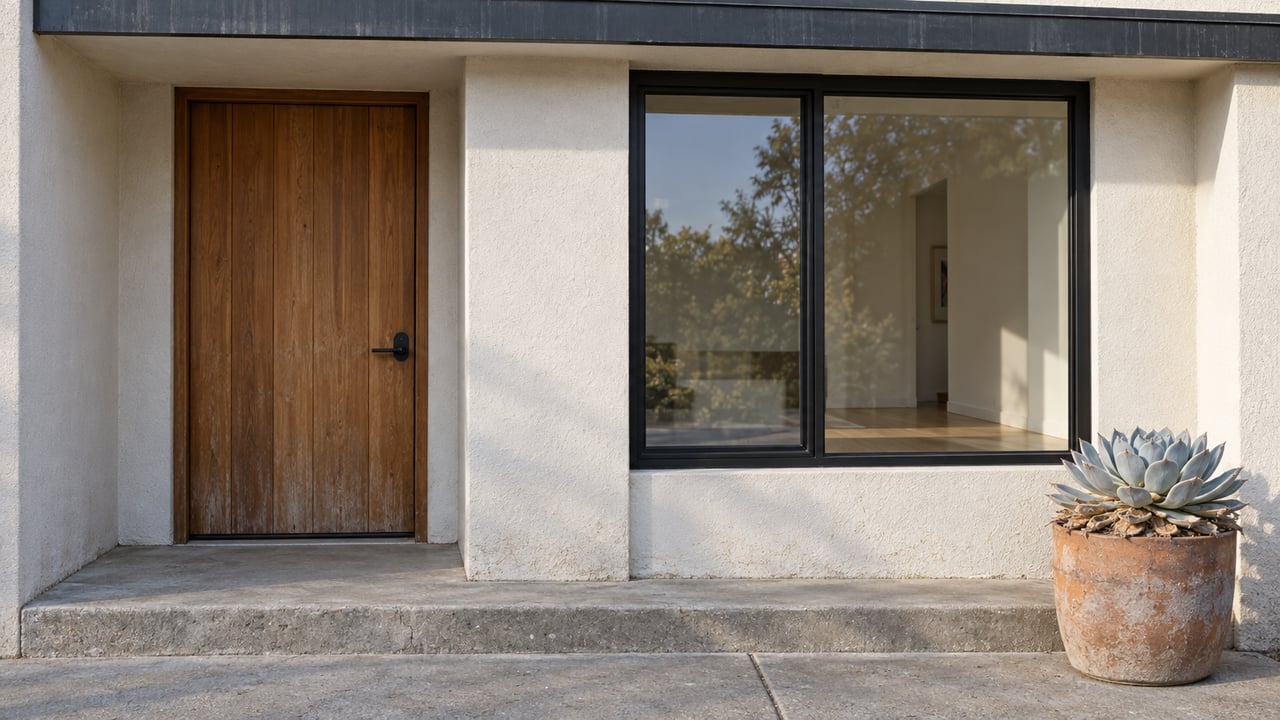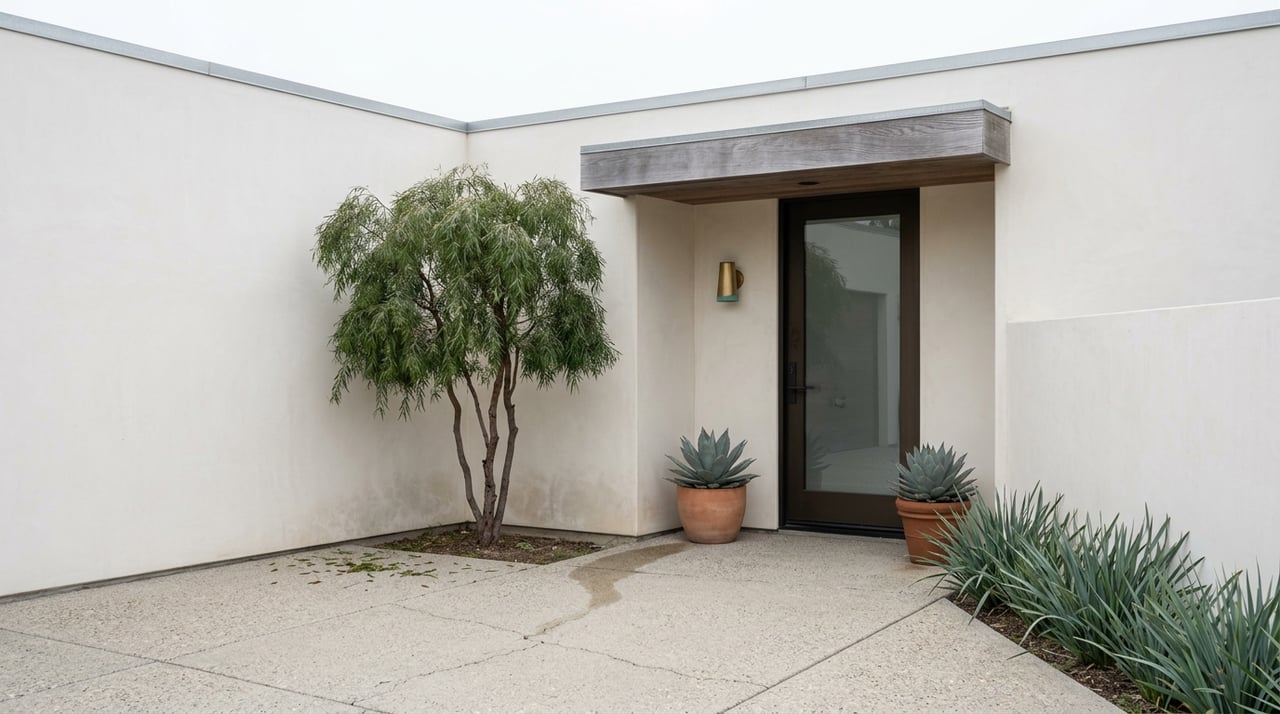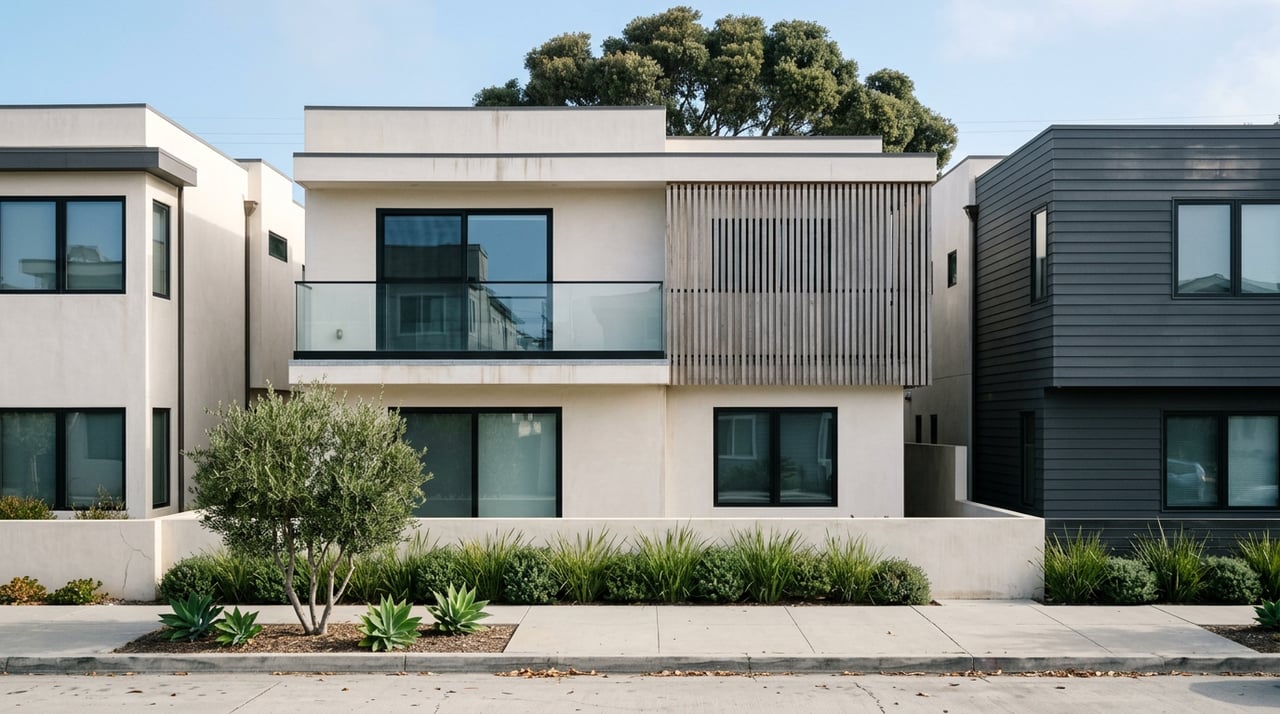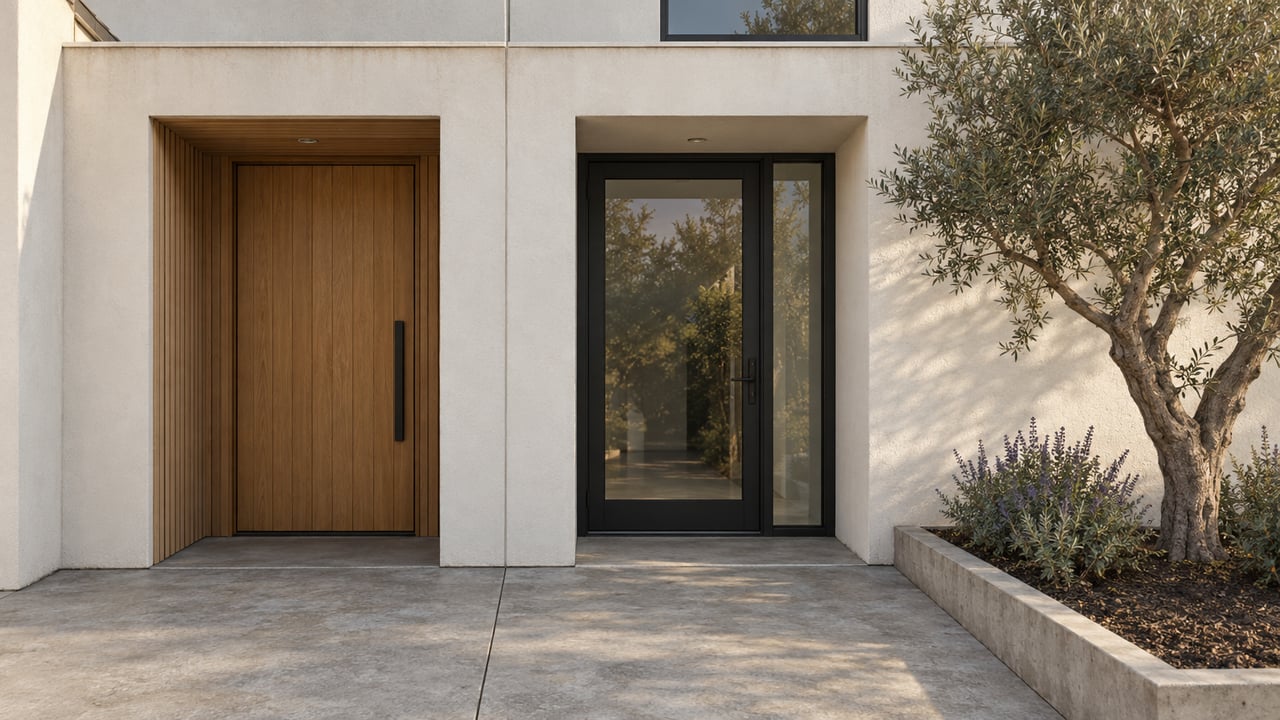
A vacant lot at 3671 Inglewood Boulevard, just north of Venice Boulevard, is being subdivided into seven separate parcels. Each will get its own two-story, three-bedroom house, factory-built off site and delivered to the property. There's no plan for individual garages. Instead, the seven homes will share one private driveway and a single carport.
If you walked past that lot in six months, you would likely see seven finished houses on a quiet residential block and assume they went through the same process every other new home on that street went through: a planning hearing, a chance for neighbors to weigh in, maybe an appeal. None of that happened here, and it isn't going to. The application, filed January 21, 2026 by an entity called Dream Big Acquisitions 6 LLC, invokes a state law that removes the hearing entirely. If you're shopping new construction in Mar Vista right now, understanding what that law changed matters more than the square footage on the flyer.
What the State Took Off the Table
The law is SB 1123, an expansion of California's Starter Home Revitalization Act that took effect July 1, 2025. It lets a property owner subdivide a vacant single-family lot into as many as ten parcels and build a home on each one, using what the statute calls ministerial approval. In practice that means the city has to process the application without a discretionary hearing, without a public comment period, and without environmental review under CEQA. There's also no right of appeal. If the city doesn't act within 60 days, the project moves forward anyway.
The law caps unit size (an average of 1,750 net habitable square feet per home) and requires the lot be genuinely vacant: no permanent habitable structure, and not occupied within the past five years. That's why both Mar Vista projects following this path started with a house coming down before the subdivision could go in. It also strips cities of tools they'd normally use to shape a project. Under SB 1123, a city cannot impose extra frontage or lot-width requirements, cannot set a floor-area ratio below 1.0 for projects of three to seven units, and cannot require a homeowners association beyond what the statute itself allows.
That last part is the one buyers tend to miss.
Two Lots, Same Playbook
3671 Inglewood isn't an isolated case. A second Mar Vista lot, at 3252 S. Barrington Avenue, is going through a similar process under an older small-lot subdivision framework, filed in November 2025 by an entity called Barrington Vision LLC. The two projects land differently enough that comparing them shows the range of what "small-lot" can mean on the ground.
| 3671 Inglewood Blvd | 3252 S. Barrington Ave | |
|---|---|---|
| Units proposed | 7 | 5 |
| Filed | Jan. 21, 2026 | Nov. 7, 2025 |
| Applicant | Dream Big Acquisitions 6 LLC | Barrington Vision LLC |
| Construction | Factory-built, delivered to site | Site-built, four-story |
| Parking | Shared driveway, 7-space carport | Two-car garage per unit |
| Legal basis | SB 1123 (Starter Home Revitalization Act) | Small lot subdivision ordinance |
| Status (as of research) | Under city review | On hold |
The Barrington Avenue project gives each unit its own garage, which solves the shared-parking question the Inglewood project doesn't. But both share the same underlying feature that matters for a buyer: a formerly single-family lot is becoming several separately owned homes, approved through a process built for speed rather than design review or neighbor input. Urbanize LA's ongoing coverage of the neighborhood shows this isn't a two-lot anomaly. Applications for similar small-lot and multifamily infill are moving through the pipeline at addresses across Mar Vista, from Washington Place to Mitchell Avenue to Wade Street.
No HOA, Just a Maintenance Agreement
Under a conventional condo or planned development, shared driveways, carports, and common landscaping get folded into a homeowners association with dues, reserves, and a board that can enforce maintenance. SB 1123 doesn't allow a city to require that structure on these projects. What typically governs the shared elements instead is a private maintenance agreement among the individual owners, usually recorded as a covenant that runs with the land.
That's a real difference for how you use the property day to day, not just paperwork. A maintenance agreement can specify who pays for resurfacing the shared driveway, how repair costs get split, and what happens if one owner stops paying their share, but only if it's written that way. Nothing in SB 1123 mandates a reserve fund, and nothing forces the agreement to anticipate a disagreement before it happens. If you're looking at a unit on a lot like 3671 Inglewood, the maintenance agreement isn't a formality to skim during escrow. It's the entire governance structure for the driveway and carport you'll depend on every day, and it should be reviewed with the same attention most buyers give to CC&Rs on a condo.
The Question the Flyer Won't Answer
Mar Vista sits close enough to the city's historic oil production areas that some parcels carry a methane zone or methane buffer zone designation under the Los Angeles Municipal Code, the same underground legacy that shapes construction requirements in Downtown LA and Porter Ranch. New buildings in a designated zone are required to install a mitigation system, typically a sub-slab vent layer and an impervious membrane under the foundation, sized to the concentration found during testing.
Zone boundaries don't follow neighborhood lines and can split individual blocks, so the only way to know a specific lot's status is to check it directly through the city's ZIMAS database, which lists any parcel as "No," "Methane Buffer Zone," or "Methane Zone." Sellers are required to disclose methane zone status, and buyers planning any future renovation on a lot that carries the designation should confirm what mitigation is already in place versus what a future permit would trigger. The mitigation portion of a building permit carries its own valuation, calculated at $5 per square foot of building footprint, a real number worth having in hand before assuming a future addition is a simple change order.
For a small-lot project where seven new foundations are going in at once, this isn't a hypothetical. It's baked into the construction cost the builder already priced, whether or not it shows up anywhere in the marketing.
What to Verify Before You Write an Offer
If you're evaluating a home on a subdivided Mar Vista lot, three things are worth confirming before you get emotionally attached to the floor plan:
- The recorded maintenance agreement for any shared driveway, carport, or common area, including how costs are split and what happens if an owner doesn't pay
- The parcel's methane zone status through ZIMAS, and whether a mitigation system was installed as part of construction
- Whether the unit was approved ministerially under SB 1123 or an older small-lot ordinance, since that affects what design standards applied and whether any conditions of approval are still open
None of these are reasons to walk away from a well-built home on a well-located Mar Vista block. They're the specific homework that replaces the hearing process the state has removed. The city isn't going to catch a poorly drafted maintenance agreement for you, and a listing description isn't required to mention a methane zone unless it shows up on the disclosure paperwork. That verification now sits with the buyer, which is exactly what changed when this law took effect.
A Few Direct Questions
Is a home on a small-lot subdivision a single-family home or a condo? It's typically owned fee simple, meaning each unit and its parcel are owned outright rather than as a share of a larger association, similar to a townhome. That's different from both a traditional detached single-family home and a condo, which is why the maintenance agreement matters so much.
Can neighbors still object to one of these projects once it's filed? Under SB 1123, the answer is generally no. The law removes the discretionary hearing and the right of appeal for qualifying projects, which is the core tradeoff behind the faster timeline.
Does every Mar Vista lot carry methane zone status? No. Zone boundaries are parcel-specific and can vary block to block. Checking ZIMAS for the exact address is the only reliable way to know.
New construction in Mar Vista is arriving faster than it used to, and the paperwork behind it looks different than what most buyers expect. If you're comparing one of these small-lot homes against a traditional resale on the same block, The Grady Group can walk the maintenance agreement, the permit history, and the zone status with you before you write an offer.